You found an old report. It looks solid. It even shows your property. So you include it with your permit and expect things to move forward. Then the city pushes back. That catches a lot of people off guard. Most assume the report still holds up, but the ground doesn’t stay the same forever. Small changes add up over time, and suddenly that old report may not reflect what’s really there anymore. That’s usually when people start looking into geotechnical engineering services to double-check if the report still works for their project.
And in Denver, that timing can affect whether your permit moves forward or gets delayed.
Why a Geotechnical Engineering Report Doesn’t Last Forever
A geotechnical engineering report studies what’s under your property. It looks at soil, moisture, strength, and how a structure should sit on that ground.
But that report is tied to the day it was done.
So when time passes, the conditions it describes may no longer match what’s there now. Even if the surface looks the same, the ground can shift. Water moves. Soil reacts to weather. Nearby work can affect your lot without you noticing.
Because of that, engineers and city reviewers treat these reports as time-sensitive. They want to know if the data still reflects the current site, not just what it looked like in the past.
What Denver Looks for During Permit Review
When a permit goes in, the city does not just check if a geotechnical engineering report is included. They look at whether it still fits your project today.
They focus on the report date, the design you are submitting, and what has changed on or around the property. If those pieces do not line up, the review slows down.
This is where many projects hit a delay. The report exists, but it no longer matches the situation.
When a Geotechnical Engineering Report Still Works
A newer report usually passes without much trouble. If it was done recently and the project has not changed, it often still reflects the current conditions.
This happens when the design stays the same, the site has not been disturbed, and there has been little activity nearby. In those cases, the report still does its job.
Sometimes an engineer will still take a quick look and confirm it applies. That step is simple and helps avoid questions during review.
When Time Starts to Work Against the Report
After a while, things get less clear.
A geotechnical engineering report that is a bit older may still be usable, but it often needs a second look. Time gaps between the report and the permit submission raise questions. Even small changes in the project or the site can make a difference.
At this stage, an engineer may review the report and confirm whether it still fits. If it does, you move forward. If not, you deal with the issue before it reaches the city.
Catching it early makes a big difference.
When a Report Becomes Too Old to Use
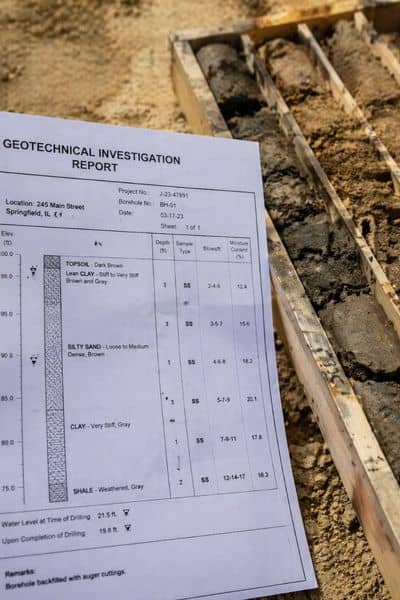
At some point, the report stops being reliable for permit use.
That usually happens when several years have passed, or when the project has changed in a meaningful way. It can also happen if the site has been disturbed, graded, or affected by nearby construction.
In those cases, the city will likely ask for updated geotechnical engineering work. That means new testing and new recommendations based on current conditions.
It is not about the quality of the old report. It is about whether it still applies.
What Changes on a Site Over Time
People often assume the ground stays the same. It doesn’t.
Water levels can rise or drop. Soil can expand and shrink with the seasons. Nearby construction can affect the ground under your property, even if you don’t notice it right away. Utility work can also disturb soil that used to be stable.
Drainage can shift too. Water might start moving through your site in a different way than before.
These changes are not always easy to see, but they matter once you start building. In situations like this, it often helps to check an updated property survey so you know everything still lines up before moving forward.
How Project Changes Affect Your Report
Even if the land stays the same, your project might not.
A larger building places more weight on the soil. A different foundation system may need different support. Adding new features can change how loads move through the ground.
Because of that, a geotechnical engineering report must match the current design. If the design changes, the recommendations may need to change too.
This is where many reports fall out of date.
A Common Reason Projects Get Delayed
A project starts with one plan. A geotechnical engineering report is done early.
Then time passes. The design grows or shifts. The report stays the same.
When the permit is submitted, the mismatch shows up. The city asks for an update. The project pauses while new work is done.
That delay could have been avoided with a simple review before submission.
How to Stay Ahead of the Problem
The easiest way to avoid delays is to check your geotechnical engineering report early.
Look at when it was completed. Think about what has changed since then. Consider whether your design is still the same as it was when the report was written.
If anything feels different, have an engineer review it before you submit your permit.
That step takes far less time than fixing a problem after the city flags it.
Keep Your Project Moving Forward
A geotechnical engineering report plays a key role in getting a project approved. But it does not last forever.
Time, site conditions, and design changes all affect whether it still works.
Checking your report before you submit can keep your project on track and avoid unnecessary delays.
In Denver, that small step can make the difference between a smooth approval and a stalled permit.