Building in Denver is exciting. The city keeps growing, and new projects move fast. However, before you start construction, one issue can shape your entire project: stormwater compliance. Water does not care about deadlines. It does not care about budgets either. In Denver, sudden storms, snowmelt, and clay soil create real drainage problems. Because of that, local agencies enforce strict stormwater rules. This is where the right engineering firm becomes more than just a designer. It becomes your project’s protection.
Why Stormwater Rules Matter So Much in Denver
Denver sits along the Front Range. That means strong summer storms can hit fast. At the same time, spring snowmelt adds more water to the ground. Since much of the soil has clay, water does not soak in easily. Instead, it runs across the surface.
Now think about how much Denver has grown. More buildings mean more concrete and pavement. Because of that, rainwater has fewer places to go. So the city requires careful drainage planning before approving construction.
The City and County of Denver, along with the Mile High Flood District, review every drainage report closely. If your plans miss something, they send them back. That delay can slow financing, contractors, and tenants.
For this reason, a good engineering firm starts thinking about stormwater early.
It Starts With Understanding the Land
Every property drains in its own way. Two lots on the same street can behave very differently during a storm.
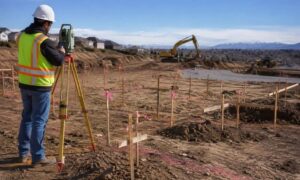
A strong engineering firm studies the site carefully. That means reviewing surveys, mapping where water flows, checking soil types, and looking at flood maps. Instead of guessing, engineers calculate how much runoff will happen during different storm sizes. Denver often requires review of 2-year, 10-year, and 100-year storms.
Those numbers simply show how big a storm might be over time. The goal stays simple: predict how much water will move across your property.
When this step happens early, it prevents costly changes later.
Designing a System That Controls the Water
After studying the site, the next step is managing the water safely.
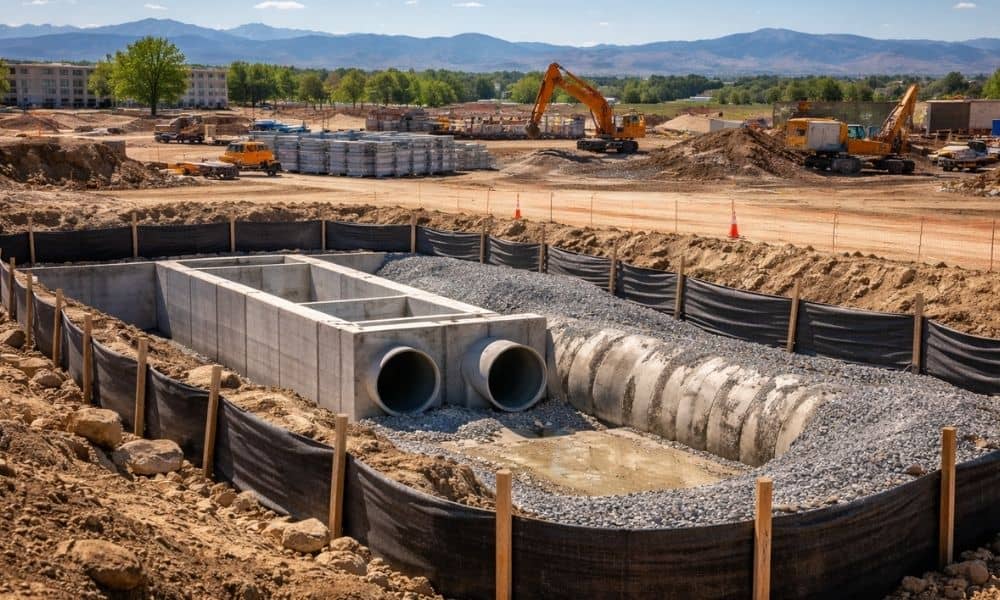
In many Denver projects, the city requires detention systems. These systems hold water for a short time and release it slowly. That way, nearby pipes and creeks do not overflow.
Large properties may use open ponds. Smaller city lots often use underground vaults instead. At the same time, Denver requires water quality treatment. This rule ensures runoff gets cleaned before leaving the site.
An experienced engineering firm designs systems that meet these rules while protecting your usable space. Poor design can reduce parking or shrink your building area. Smart design keeps your project efficient and compliant.
Stormwater Rules Continue During Construction
Stormwater compliance does not stop once plans get approved. During construction, loose soil can wash into streets and drains.
Because of that, Colorado requires a Stormwater Management Plan for many projects. This plan explains how the site will control erosion. It may include silt fences, inlet protection, and stabilized entrances.
Inspectors can visit the site without warning. So crews must follow the plan at all times.
A responsible engineering firm helps coordinate with contractors to keep the site compliant. This support prevents fines and work stoppages. As a result, your project stays on schedule.
Getting Through Denver’s Review Process

Denver requires a detailed drainage report before issuing permits. The report includes runoff calculations, basin maps, detention design details, and impact studies.
However, clear writing matters just as much as numbers. If reviewers cannot follow the logic, they request changes.
An experienced engineering firm prepares reports that answer questions before reviewers ask them. Sometimes early meetings with city staff also help clarify expectations. Because of that preparation, approvals move faster.
A Simple Example
Imagine you plan to build a small shopping center in Denver. At first, the site looks simple. You assume a standard underground detention system will work.
However, after reviewing drainage maps, the engineering firm finds stricter release limits due to nearby channels.
Instead of submitting weak plans, the engineer adjusts the design early. They increase detention size and adjust the layout slightly. Because they solve the issue before review, the city approves the plan with fewer revisions.
That early action saves time and avoids stress.
Why Local Experience Matters
Not all engineers understand Denver’s stormwater rules the same way. Local knowledge makes a big difference.
A Denver-based engineering firm understands Mile High Flood District standards. They know common review issues. They also understand how local soils behave during storms.
This experience reduces guesswork and speeds up approvals.
Plan Early and Protect Your Project
Many owners wait too long to think about drainage. By that time, building and parking layouts leave little room for changes.
Instead, involve an engineering firm early. When stormwater planning shapes the site from the start, you avoid redesign, delays, and extra costs.
In Denver, water will always find a path. With the right engineering firm guiding your project, that path works for you — not against you.