If you’ve ever asked about land survey costs, you may have noticed something odd. One surveyor gives a low quote, while another comes in much higher. The properties look similar. The size seems the same. So what’s going on?
At that point, most people start wondering why land survey costs increase, especially when the property doesn’t seem that complicated. The answer usually has nothing to do with the size of your lot. Instead, it comes down to what the surveyor finds once the work begins.
In many cases, two things drive the price up quickly: missing pins and outdated legal descriptions. Once you understand how these affect the job, the difference in cost starts to make a lot more sense.
Why Land Survey Cost Isn’t the Same for Every Property
Many people expect a simple, flat price. They think a survey works like a standard service: measure the lot, mark the corners, and you’re done.
But real projects don’t work that way.
Surveyors rely on physical markers in the ground and written records on paper. When both are clear, the job moves quickly. When they’re not, the work takes longer. More time means a higher land survey cost, and you start to see why land surveys cost more in some cases, even when two properties look almost the same.
Older parts of Denver tend to have more of these issues, which is where price differences really start to show.
Missing Pins Change Everything
A “pin” marks a corner of your property. It’s usually a metal rod set in the ground. Surveyors use these pins to confirm where your lot begins and ends.
Now imagine they can’t find them.
This happens more often than people think. Pins get buried under soil. Some get removed during construction. Others disappear after years of landscaping.
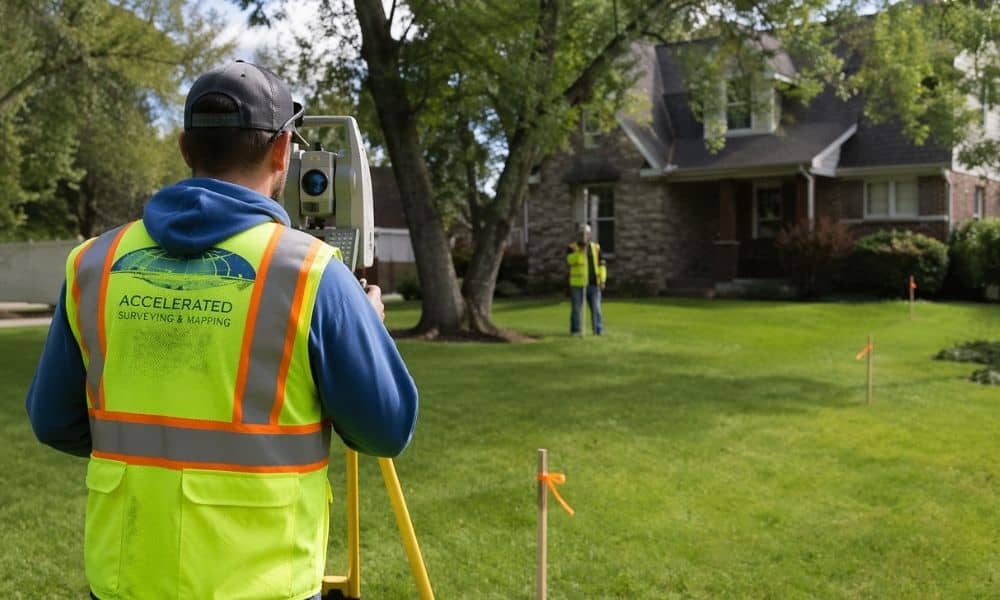
When pins are missing, the surveyor can’t just guess. They have to rebuild the boundary using nearby points and measurements.
That takes time.
They may search nearby lots for reference markers. They may take multiple measurements to confirm accuracy. In some cases, they return to the site to double-check their work.
All of that adds labor. More labor raises land survey costs.
Old Legal Descriptions Slow the Process Down
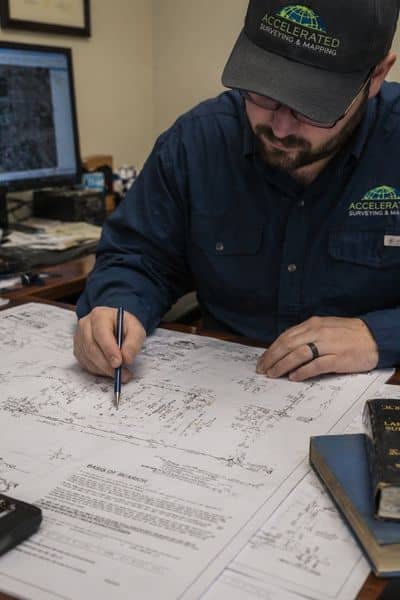
Your property also has a legal description. This is a written record that explains the boundaries of your land.
Newer descriptions are clear and easy to follow. Older ones can be confusing.
Some refer to landmarks that no longer exist. Others use measurements that don’t match modern standards. You might even see descriptions passed down through decades without updates.
This creates a problem.
The surveyor has to review old documents, compare them, and make sense of them. That means digging through records and checking for errors.
That work doesn’t happen in the field. It happens in the office, and it takes time.
More research leads to higher land survey costs.
When Both Problems Show Up Together
Now picture this situation.
There are no visible pins. The legal description is old and unclear. Nothing lines up cleanly.
This is where survey cost climbs the fastest.
The surveyor has to do fieldwork and research at the same time. They must confirm each step before moving forward. Accuracy matters, so they don’t rush.
That combination turns a simple job into a more involved one. The price reflects that extra work.
A Situation Many Homeowners Face
Think about a homeowner planning a fence or small addition.
They assume the survey will be quick. The lot looks simple. The yard looks clean.
Then the surveyor arrives.
No corner markers show up. The records don’t match the current layout. The survey takes longer than expected.
The final cost ends up higher than the first estimate.
This happens often, especially in older Denver neighborhoods.
Signs Your Survey May Cost More
You don’t need to guess. There are clear signs that your land survey cost may be higher.
Older homes are one. Long-standing neighborhoods often have outdated records.
No visible markers is another. If you can’t spot any corner pins, expect more work.
Irregular lot shapes also make things harder. Straight lines are simple. Angled or uneven lines take more time to verify.
No recent survey adds to the issue. Without a newer reference, the surveyor starts from scratch.
If more than one of these applies, the cost usually goes up.
How You Can Help Control Land Survey Cost
You can make the process easier before the survey even starts.
If you have an old survey, share it. Even if it’s not perfect, it gives the surveyor a starting point.
Look around your property. If you see any markers, point them out.
Gather your closing documents. These may include useful details about your lot.
Also, be clear about your goal. A fence project needs a different level of detail than a full property review.
Clear information saves time. Less time helps control land survey cost.
Why This Matters Before You Start Any Project
Many people wait until the last minute to order a survey.
That creates problems.
Delays happen when the survey takes longer than expected. Costs increase when issues show up late. Plans may change if boundaries don’t match assumptions.
Getting a clear survey early avoids these setbacks.
It gives you a solid base before you build, design, or install anything on your property.
What You’re Really Paying For
A survey is not just about marking lines on the ground.
You’re paying for accuracy. You’re paying for research. You’re paying for a clear answer to a question that can affect your property for years.
Land survey cost varies because every property tells a different story. Some are simple. Others take more work to understand.
Missing pins and old legal descriptions are two of the biggest reasons why.
When you know that ahead of time, the price feels less like a surprise and more like a necessary step.